Finding Your Sea Legs: An Amputee’s Guide to Getting Started With Sailing
Can sailing be a sport for amputees? Fritz, an experienced sailor, amputee, boat owner, and certified Yachtmaster Offshore, has a refreshingly honest answer: It depends. In this guest post, he takes us from the challenges of capsizing dinghies to the freedom of keelboat sailing, sharing practical advice for a safe and enjoyable first trip on the water. Along the way, he reminds us that with the right boat, the right conditions, and a bit of confidence, sailing can open up a whole new world — quite literally.
Sailing – A Sport For Amputees?
As so often, the answer is a firm “Well, it depends!”. There are countless ways to go sailing: It starts with dinghy sailing, continues with relaxed bay-hopping, then cruising, regatta sailing, and even sailing expeditions.
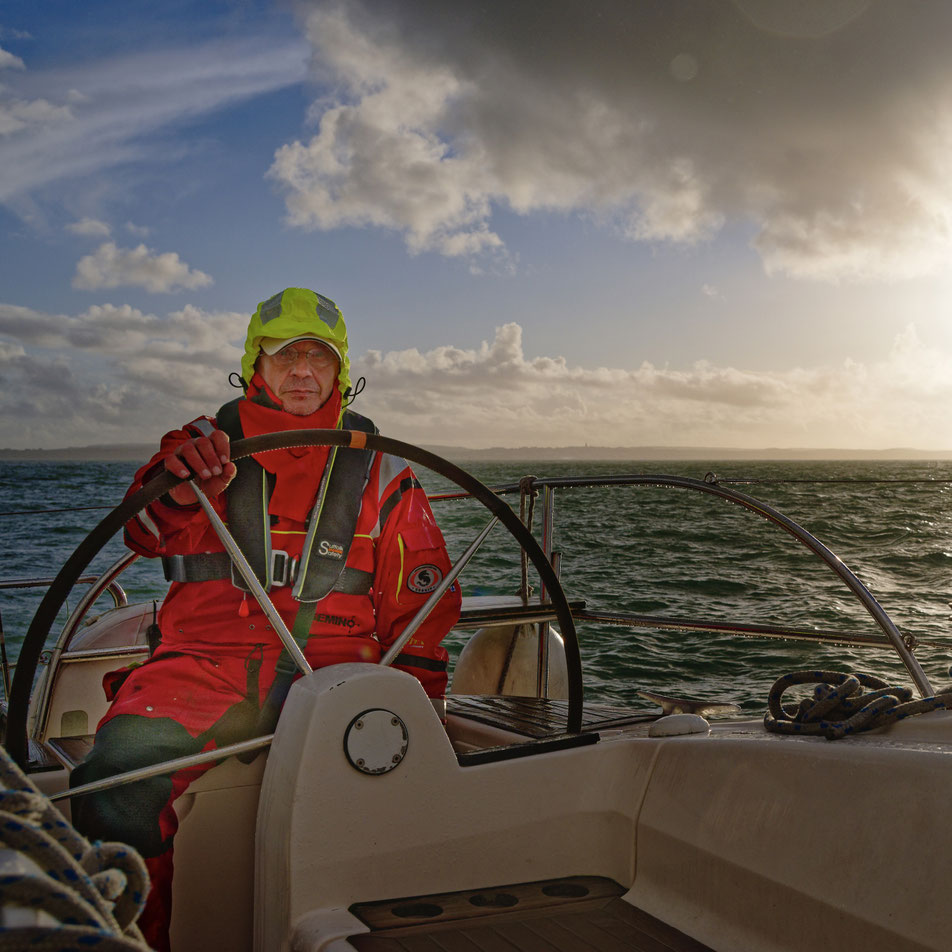
My name is Fritz, I am an amputee and I love to sail - often enough that owning my own boat makes sense. My sailing trips have taken me, among other places, to the Arctic and across the Atlantic,
and I hold the Royal Yachting Association’s Yachtmaster Offshore certification.
For many people, the first encounter with sailing is in a dinghy. These small, simple boats with modest sail areas practically invite you to give them a try. But there’s a catch: Dinghies can and
will capsize, leaving you swimming next to an overturned boat. The first task is to right the boat, and then somehow get yourself back on board. With an amputation, that can quickly become a real
challenge, and I tend to advise against starting there.
Things look very different with a keelboat. As long as you sail it within the conditions it was designed for, there’s nothing stopping you from enjoying a small - or even a longer - trip. The
best way to get on such a boat is through a sailing club. Some are casual, some a bit more posh, but don’t worry: Sailors are generally a very sociable bunch.
Your first day on the water is ideally a sunny, warm day with steady light winds. Depending on the length of the trip, you bring suitable clothing and a pair of sneakers with clean soles. Boat
owners usually don’t appreciate deck scratches from street shoes, and they’ll be grateful for your consideration. If you’ve been invited aboard, the skipper will give a safety briefing before
heading out. You’ll learn where you can safely hold on and where you shouldn’t, you’ll get your PFD (personal flotation device), you’ll be shown the key controls on the boat, and you’ll hear what
your role on board will be. This is the moment to mention any personal needs: As a below-knee amputee, I explain that I move more slowly on board to stay safe, and that I’m not the ideal person
to wrestle a wildly flapping sail on a pitching foredeck.
Don’t worry: There’s still plenty to do on a sailboat. Someone needs to steer the boat, someone needs to handle the sails, someone needs to keep an eye on the surroundings. In the galley, everyone is welcome to help prepare a coffee break. And if none of that appeals to you, you can simply enjoy the ride: A sailboat leaning into the wind with a rushing bow wave is an incredibly captivating experience. You hear only the wind and the water, and few people can resist the elegance of it all.
Sailing With Limb Loss: Where The Adventure Begins
So for a first sailing experience, I’d recommend spending about half a day on a keelboat close to shore. And if the spark catches, then the whole world - quite literally - opens up even for an amputee. Just look at Craig Wood from the UK: He became the first triple amputee to cross the Pacific alone on a 90day voyage. He would probably just smile gently at the question of whether sailing is a sport for amputees.
Having sailed both before and after my amputation, I can sum up the biggest changes for myself like this: First, the mentioned stability on board. The wilder the boat’s motion, the slower I move. Getting on board can sometimes be a bit more challenging, but so far I’ve managed every boat without major issues. And swimming from the boat requires some thought - not every swim ladder is equally suitable. Otherwise, I see myself in the proud tradition of onelegged pirates and Captain Ahab.
Here Is My Invitation To You: Join Me This Summer In
By the way: If anyone is now tempted to give it a try, come and join us. We’ll be sailing in Canada in the second half of July and in August, exploring the St. Lawrence River, New Brunswick, Prince Edward Island, and Nova Scotia. If you’re amputated, curious, happen to be nearby, and have some time: Send me a message (via Active Amputee). Maybe you’d like to join us for a bit of sailing.

Guest post by Fritz Pölzl. Fritz, born in 1965, is married, has one daughter, and lives in Vienna. He is self-employed in the field of adult education, and in his free time he is an avid hiker, mountaineer, rock climber, and sailor. In 2022, his left lower leg was amputated as a result of a sports injury.
Weitere Artikel
Fokusthema Sportprothese
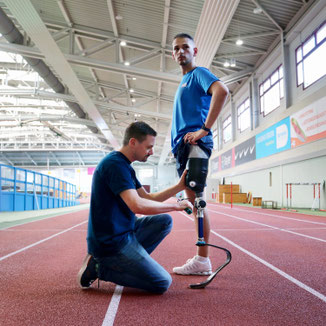
Spätestens mit den Paralympischen Spielen 2012 in London rückte der Behindertensport vom Rande der Berichterstattung ins Rampenlicht. Und damit wurden binnen kurzer Zeit auch die besonderen Sportprothesen, die die Weltklasseleistungen der Athlet*innen ermöglichen, zum Gesprächsthema. Damals war der südafrikanische Sprinter Oscar Pistorius - auch bekannt als The Blade Runner - einer der Stars der Spiele. Pistorius und viele andere Sportler*innen waren plötzlich auch jenseits des oft recht engen Kreises des Para-Sports bekannt. Seit dem hat sich viel getan und das Thema Sportprothese erfreut sich einer immer größeren Beliebtheit. Daher freu ich mich heute auf ein Interview mit Tim vom Hagen. Tim ist CPO - sprich Certified Prosthetist/Orthotist - mit langjähriger Erfahrung im Prothesenbau und Filialleiter bei Lentes Prothesenwerkstatt in Leverkusen. weiterlesen
Peers und Aufklärung
Heute habe ich das Vergnügen, einen Artikel von Kim Cremers Blog 'Das Leben geht weiter, auch wenn es humpelt' posten zu können. Vielen von euch ist Kim aka Kimii.b.c wahrscheinlich von Instagram bekannt. Kim und ich wollen über die kommenden Monate immer mal wieder was zusammen machen. Und der heute Post stellt den Auftakt für diese neue Kooperation das. Und dabei geht es unter anderem um Aufklärung und den Mehrwert von Peer-Begleitungen und gegenseitiger Unterstützung. weiterlesen
USB Ladegerät
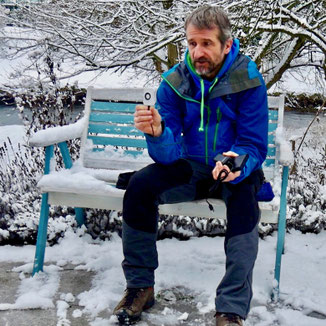
Ja, endlich ist es da. Das USB-Ladegerät von OttoBock zum Aufladen seiner Mikroprozessorknie. Das ist etwas, auf das ich schon lange gewartet habe. Und wenn ich auf die letzten 20 Jahre zurückblicke, gehört dieses Gerät zu den wenigen Dingen, die für aktive Amputierte wirklich neue Wege beschritten haben. Nach der Einführung von Mikroprozessorknien und den ersten vollständig wasserdichten Mikroprozessorgeräten ist dieses Ladegerät ein weiterer großer Schritt in Richtung völlige Unabhängigkeit. weiterlesen