
Beyond the Setback: The Art of Rebuilding an Active Life
If you live with limb loss or limb difference and try to stay active, you probably know this feeling. The feeling when things start clicking and you feel like you have your rhythm back, then something comes along and knocks you sideways. Maybe it is a skin issue, a socket problem, nerve pain, a fall, or a surgery you did not see coming. Suddenly the routines that made you feel strong and capable disappear, and you are back in recovery mode once again.
Navigating the Non-Linear Path of Recovery
For many people living with limb loss and limb difference, rebuilding an active life after limb loss becomes one of the most meaningful milestones along the way. The first time you walk confidently in your prosthesis. The first workout that leaves you sweaty instead of frustrated. The first moment you realize you are not thinking about every step you take. Those moments feel larger than life. They are not solely about exercise. They are about independence, and through that, realizing that life can still move forward.
But living in this body means progress rarely follows a straight line. Even when you find your rhythm, small bumps in the road can quickly turn into something much bigger. A sore from your socket appears out of nowhere. Phantom pain decides to make an appearance. A nerve injury starts acting up. Suddenly the body you worked so hard to understand is commanding you to slow down once more.
Most of the setbacks people living with limb loss and limb difference deal with are not dramatic enough to make headlines, but they can completely derail daily life. Socket fit changes when your limb volume shifts. Skin breaks down from heat or friction. A liner suddenly causes irritation. Sometimes something as small as swelling or a blister means you have to stay out of your prosthesis for a while. When your mobility depends on the relationship between your body and a mechanical device, small problems can quickly become big ones.
My latest setback came from severe nerve pain in my residual limb caused by a symptomatic neuroma and nerve damage from a dog bite. Over time the pain became excruciating and impossible to manage. It interfered with my rigorous swim training, sleep, prosthetic use, and basic daily living tasks. Due to my allergies to the first three lines of medication treatment, I felt hopeless. After two years of exhausting all other approaches, surgery ultimately became the only remaining option.
Recently I had targeted muscle reinnervation surgery, or TMR. During the procedure, my surgeon removed the neuroma and a little over two inches of the damaged nerve; the residual nerve was rerouted into nearby muscle. The premise of TMR is to give that nerve a new job so it stops firing painful signals. Neuroma pain can feel electric and relentless; for many people living with limb loss and limb difference, procedures like TMR can offer genuine relief.
Even when surgery offers hope, recovery still means stepping away from activity for a while. For many of us, movement is what helped rebuild our independence in the first place. When it is something you rely on for both your physical and mental health, that pause can feel heavy. When the prosthesis has to stay off and training stops, it can feel like a piece of you disappears overnight.
At the same time of my nerve injury issues, I am also preparing for a much larger surgery. Although this operation is not related to my amputation, it will deeply impact my mobility. Complications from previous neurosurgeries necessitate a major skull fusion revision for me. The neurosurgical team will remove and replace the hardware, stabilizing my skull and upper cervical spine. It is expected to be a long surgery with an even longer recovery. For people living with complex medical conditions, setbacks are rarely isolated events. Often, multiple parts of your body compete for medical attention simultaneously.
Many people living with limb loss and limb difference collect a long list of procedures along the way. Revision surgeries, infection treatments, nerve operations, and adjustments to the residual limb all become part of their story. None of it is easy, and each one requires patience and a willingness to rebuild once again.
The return to activity after surgery typically does not look dramatic. It starts with small wins: wearing the prosthesis a little longer. taking a short walk without pain, sleeping through the night. Those victories may seem small, but they are often the first indications that your body is turning a corner.
Being active while living with limb loss or limb difference does not mean avoiding complications. It means learning how to keep moving forward when they happen. Bodies change. Prostheses evolve. Recovery takes time. But if there is one thing I have seen again and again in this community, it is resilience. One of the things I admire most about the limb loss and limb difference community is how often we find our way back; back to movement, back to independence, and back to the activities that make us feel like ourselves. Starting over is something many of us become unexpectedly proficient at. We learn how to adapt, rebuild, and rediscover movement even after setbacks we never anticipated.
The road back is rarely smooth, and it is almost never quick. Surgeries, mishaps, and unexpected pauses can interrupt the rhythm of an active life. Yet time and again, people in this community find their way forward. And when they do, they often return with a deeper appreciation for what their bodies are capable of. Every time someone takes those first steps again, it reminds the rest of us that resilience is not about avoiding obstacles. It is about continuing forward, even when the path asks us to begin once more. So if you are in the middle of a setback right now, take heart. The road back may take time, but it is still there. Step by step, you will find your way forward again.
Listen To The Episode Right Here

Guest post by Sydney Marshburn is a left above-knee amputee since 2021. Passionate about advocating for people with disabilities, she openly shares her story with the world through social media and is a mentor to those facing chronic illness/limb loss. Sydney dreams of representing Team USA at the LA2028 Paralympic Games. Follow Sydney’s journey on Instagram.
Further Reading
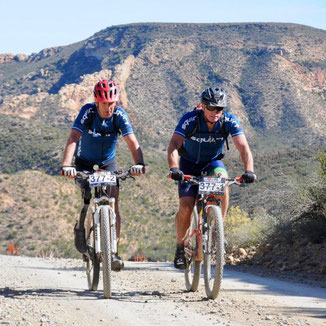
I learned to cycle after an amputation
Today’s article is all about cycling and how it helped Stephen from South Africa’s wonderful Western Cape to come back after a tragic motorcycle accident. The idea for the interview arose during a chat with Jen from ClickMedical, who mentioned Stephen and his inspiring outdoor adventures and brokered the contact. „Thanks Jen I really appreciate these contacts!“ Here is my interview with Stephen. Enjoy! Read more
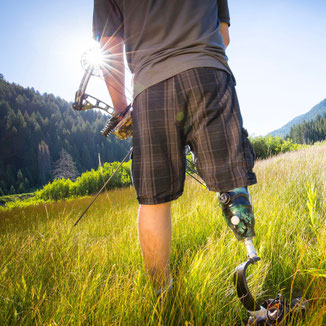
We can finally adjust our sockets
The September episode of the The Active Amputee Podcast is out. This time, I have the pleasure of chatting with Joe Mahon, an experienced prosthetist from the United States of America, the inventor of the adjustable socket, and one of the founders of Click Medical (one of my strategic partners and a great supported of this blog). Adjustable sockets have been a game changer for many amputees, enabling users to deal with limb volume fluctuation independently and on a day to day basis. Joe and I talk about the history of the adjustable socket, push-back from the industry, finally being recognized as one of the standards when it comes to patient care, and about exciting new developments for the wider limb loss and limb difference community. Read more

Healing power of nature
The days are getting longer, the summer is approaching quickly, and with it there are more and more opportunities to explore Mother Nature all around us and be outdoors and active. After weeks, months, years of Covid19-induced lockdowns and the long winter months, this is a welcome change for many of us. Good for the body, a treat for the soul. And - as we learn from Tiina today - people in Finland have a special word for this special bonding between people and the surrounding nature. Read more