Reflections On Life Post-Amputation
Today is the last day of Limb Loss and Limb Difference Awareness Month (LLLDAM) — and I’ve been sitting here wondering what I want to carry forward from it.
I became an amputee in 2005. “Fulfilled life” wasn’t a phrase I was reaching for back then. I was looking for function, for stability, for a way to move through the world again without constantly negotiating pain, limits, and uncertainty. And yet, over the years, the idea of a rewarding, a fulfilled, and adventurous life moved centre-stage again. During these initial years, I’ve learned that fulfillment after amputation is rarely a single breakthrough moment. It’s built through a thousand small decisions, adaptations, relationships, and opportunities — some of them available, some of them denied, and many of them shaped by sheer luck.
As my closing thought for LLLDAM, here are three reflections that have stayed with me over the years — especially as someone who cares deeply about both the personal experience and the bigger systems around limb difference.
The Quiet Privilege Of A Socket That Fits
Let me start with this one. I was incredibly lucky: my first prosthesis - and especially my first socket - was a near-perfect fit.
That meant I could do something life-changing early on: I could trust my prosthesis. Not theoretically. Not “one day, yes! one day, nope”. But in the practical, everyday way that trust gets built. By using it, testing it, learning its language, and realizing it will hold you. My knee before the amputation had been barely functioning for years. So when I suddenly had the ability to move more freely, I didn’t just accept being an amputee. I embraced and genuinely loved my life as an amputee. I went and did the things I hadn’t been able to do for a long time. Movement became possibility again. And soon that possibility took me around the globe.
Only later did I experience what many people meet much earlier: Severely limiting problems with socket fit. Pain. Reduced mobility. The kind of friction that turns every step into a negotiation. That’s when the full truth hit me: if the order of those experiences had been reversed - if I’d started with years of socket issues - my relationship to amputation, confidence, and participation might have looked completely different. And moving to London three months after the amputation, then a year later on to East Timor, and yet anpother two years later I did another career shift that saw me working in dozens of countries in Europe, Asian, and Sub-Saharan Africa. All this might have stayed a dream, instead of being my reality.
So when we talk about “resilience” or “mindset,” I always want to hold space for this: Sometimes it’s down to luck. Sometimes what looks like confidence is also access. Sometimes what looks like grit is also good fitting. And sometimes the biggest factor is whether the system met you with support - or with barriers.
Community Isn’t A Nice-To-Have
My second thought is all about community. If socket fit is the physical interface with the world, community is often the emotional and social interface.
I’ve seen (and felt) how much difference it makes to be surrounded by people who get it - whether that’s other amputees, limb different folks, adaptive athletes, clinicians and prosthetists who listen, friends who don’t make your body the center of every conversation, or family members who stay steady through the learning curve.
Community does more than provide encouragement. It shares practical knowledge you can’t always find in brochures: what to ask for, what to push back on, what’s normal, what’s not, and how others navigated setbacks without losing themselves. It helps you reframe the story from “I’m alone with this” to “I’m part of something bigger.” And it can offer the kind of honest hope that isn’t sugarcoated. The kind that says: Yes, it’s hard; yes, you can still build a good life; and no, you don’t have to do it alone.
For an informed audience, this matters: health outcomes aren’t just biomedical. They’re relational. Belonging and peer support are not soft factors. They are an essential infrastructure for wellbeing.
Participation Is Still Priced Out Of Reach For Too Many People
And last but not least: My take-away number three. And that’s the part that still frustrates me the most: access to adaptive sports equipment - and with it a healthy lifestyle and genuine participation - is still far too limited. And often prohibitively expensive.
We talk a lot about inclusion, but inclusion without access is just branding.
The ability to move, train, play, travel, and fully participate with family, community, and country shouldn’t depend on whether someone can personally absorb the cost of specialized gear, regular replacements, travel, maintenance, or the endless hidden expenses that come with an active amputee life. And it shouldn’t depend on whether someone lives in a place where reimbursement systems are humane, responsive, and future-oriented.
Adaptive sport isn’t only about sport. It’s about health, identity, mental wellbeing, social participation, and the right to show up fully. Not as an exception, but as the rule.
When I look at what’s possible today in prosthetics and adaptive tech, I feel real hope. But when I look at who can realistically access it, that hope is unevenly distributed. That is a policy issue, a design issue, a resource issue, and in the end a social justice issue. It's not an individual failing.
My Closing Thoughts On This Year's LLLDAM
LLLDAM is a reminder. But for me it’s also a commitment: To keep celebrating what’s possible, to keep naming what’s missing, and to keep backing the people and communities pushing for change.
I’m grateful for the life I’ve built since 2005. Not because it’s been effortless, but because it’s been rich with movement, learning, connection, and meaning. And I’m hopeful: Not in a naïve way, but in the grounded way that comes from seeing what happens when good fit meets good support meets real opportunity.

Post by Bjoern Eser. Bjoern is the founder of and shaker and maker behind The Active Amputee.
Further Reading
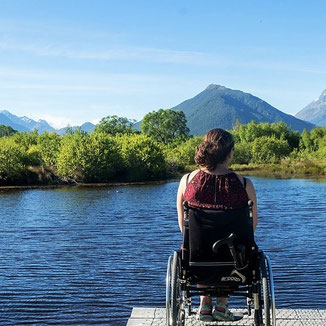
Aurélie, the wheelchair using globetrotter
"For the first time, in April 2015, I travelled far away from France. For years, I wanted to discover other cultures. So when I finished my studies I didn't hesitate and bought a flight ticket to Japan. Three amazing weeks! During these vacations in the country of the rising sun I caught the travel bug and I realised this passion was about to become a central part of my life." That's how Aurélie's amazing story started back in 2015. Read more
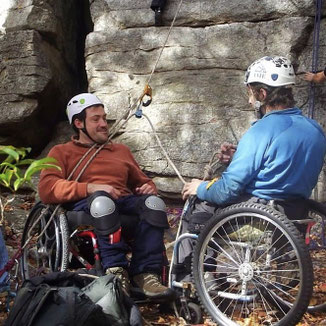
The Enock Glidden Special
To kick this new series off, I am extremely happy to partner with one of the most inspirational people I have ever heard about. The always amazing Enock Glidden. Today, Enock will share his story with you. Tomorrow we will show a video about one of his most amazing feats. On Thursday it’s back to Enock and his reflections about team work and assistance before he talks more in general about the preparation it takes to take on big adventures on Friday.
But enough talk from me. Let me hand over to Enock. Read more
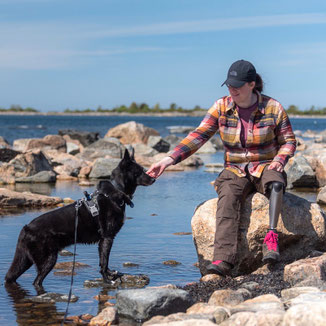
Healing power of nature
The days are getting longer, the summer is approaching quickly, and with it there are more and more opportunities to explore Mother Nature all around us and be outdoors and active. After weeks, months, years of Covid19-induced lockdowns and the long winter months, this is a welcome change for many of us. Good for the body, a treat for the soul. And - as we learn from Tiina today - people in Finland have a special word for this special bonding between people and the surrounding nature. Read more