
Milan–Cortina 2026: Why The Paralympic Winter Games Matter Far Beyond Sport
In March 2026, the world of Paralympic sport will once again gather on snow and ice. From 6 to 15 March 2026, the Paralympic Winter Games will take place in Milan and Cortina d’Ampezzo, Italy. For ten days, hundreds of athletes with disabilities will compete in alpine skiing, biathlon, cross-country skiing, snowboard, ice hockey, and wheelchair curling — sports that demand not only strength and endurance, but precision, trust in equipment, and the ability to perform in environments that were never designed with disabled bodies in mind.
For amputees, wheelchair users, visually impaired athletes, orthopedic technicians, therapists, and organisations working in disability sport, these Games are not just a spectacle. They are a moment of visibility, a testing ground for technology and training concepts, and a reminder that access to high-performance sport is always the result of long, often invisible work.
To understand why Milan–Cortina 2026 matters, it helps to look back at where the Paralympic Winter Games came from — and how much had to change before winter sport became a realistic arena for disabled athletes.
From Rehabilitation To The World Stage
The origins of the Paralympic movement lie not in elite sport, but in medicine. After the Second World War, neurologist Sir Ludwig Guttmann began using sport as part of rehabilitation for people with spinal cord injuries at Stoke Mandeville Hospital in the UK. His belief was radical for its time: that competition, rather than protection, could restore dignity, confidence, and physical capacity.
While the first Summer Paralympic Games were held in Rome in 1960, it took another sixteen years before winter sport followed. The first Paralympic Winter Games took place in 1976 in Örnsköldsvik, Sweden. Around 200 athletes from 16 countries competed, primarily in alpine and Nordic skiing. Equipment was basic, classification systems were still developing, and media attention was minimal. Yet the message was clear: snow and ice were not off-limits.
In the decades that followed, the Winter Games grew slowly but steadily. A major shift came when Paralympic Games began using the same host cities and venues as the Olympic Games. This alignment brought better infrastructure, improved accessibility, and a level of professional organisation that had previously been missing. It also made the Games harder to ignore.
Milestones, Technology, And The Question of Fairness
As participation increased, so did complexity. One of the biggest challenges for the Paralympic Winter Games has always been fair classification. Early competitions often grouped athletes with very different impairments together, leading to understandable frustration and controversy. Over time, classification systems became more refined, sport-specific, and evidence-based. While debates remain — and likely always will — today’s competitions are vastly fairer than those of earlier decades.
At the same time, technology began to play an increasingly central role. Advances in prosthetic components, sit-skis, sledges, outriggers, bindings, and materials transformed what was physically possible. For amputees in particular, the interaction between body, prosthesis, and snow became a decisive performance factor. These developments raised difficult questions about access and equity. Who can afford cutting-edge equipment? Where does assistance end and advantage begin? The Paralympic movement has never fully resolved these questions, but it has learned to confront them openly.
Athletes Who Shaped The Modern Games
Some athletes did more than win medals; they changed expectations.
Oksana Masters is one of the clearest examples. Born with significant limb differences and later becoming a bilateral amputee, she built an elite career across rowing, cycling, biathlon, and cross-country skiing. Moving repeatedly between summer and winter sports, she demonstrated that performance is not tied to a single discipline or body configuration. Her career is a study in adaptability — in learning new movement patterns, mastering new equipment, and starting over without losing ambition. For amputees and rehabilitation professionals alike, Masters’ story shows how elite performance often comes from problem-solving rather than perfection.
If Masters represents adaptability, Roman Petushkov represents dominance. At the 2014 Paralympic Winter Games in Sochi, he won six gold medals in biathlon and cross-country skiing — a level of success rarely seen in endurance sport at any level. His performances forced competitors and federations alike to rethink training intensity, race strategy, and preparation. Petushkov’s legacy lies not only in records, but in how decisively he pushed Paralympic winter sport into the realm of uncompromising high performance.
In team sports, progress often looks different. One of the most influential teams in Winter Paralympic history is the United States Para Ice Hockey Team. Since para ice hockey (formerly sledge hockey) made its Paralympic debut in 1994, the U.S. program has grown into a benchmark for high-performance structure, youth development, and visibility. Milestones like their gold medals in Vancouver 2010, PyeongChang 2018, and Beijing 2022 were not just victories on the scoreboard; they reflected decades of investment in grassroots programs, adaptive equipment access, and talent identification. Their professionalized training environments, strong veterans’ pathway programs, and commitment to youth leagues have helped move the entire sport forward globally - raising expectations for competition quality and pushing other nations to invest in structured development systems.
In alpine skiing, Lauren Woolstencroft set standards through precision rather than spectacle. Dominating technical events like slalom and giant slalom across multiple Games, she showed how consistency, clean technique, and equipment mastery can decide races measured in hundredths of a second. Her career influenced how athletes train and how technicians think about tuning, alignment, and repeatability under pressure.
Barriers That Still Matter
Despite progress, the Paralympic Winter Games have never been free of obstacles. Winter environments remain physically demanding and logistically complex. Accessibility in mountain regions is still uneven, and funding for winter Para sport lags behind summer disciplines in many countries. Media attention has improved, but remains fragile.
Perhaps the most persistent challenge is global inequality. Winter sport infrastructure is expensive, climate-dependent, and geographically limited. This makes participation particularly difficult for athletes from regions without a winter sports tradition.
Milan–Cortina 2026: What To Expect
The 2026 Games are expected to welcome around 600 to 650 athletes from roughly 45 to 50 countries, competing in around 80 medal events. The programme includes para alpine skiing, para biathlon, para cross-country skiing, para snowboard, para ice hockey, and wheelchair curling. While no entirely new sports are being introduced, formats continue to evolve, particularly in snowboard and alpine events.
Para ice hockey remains one of the biggest crowd pullers: fast, physical, and emotionally charged. Biathlon and cross-country skiing continue to showcase the complex interaction between endurance, balance, prosthetic control, and tactical decision-making. Snowboard cross brings unpredictability and spectacle, while alpine skiing highlights the fine margins where equipment setup and technique meet speed.
Unexpected Nations, Extraordinary Challenges
In recent editions of the Winter Paralympics, athletes from countries with little or no winter sport tradition have increasingly appeared. South American nations such as Argentina, represented by para alpine skier Enrique Plantey, have shown that access to snow - often abroad - can open pathways even where domestic infrastructure is limited.
Historically, figures like Tofiri Kibuuka, the first African to compete at the Winter Paralympics in 1976, demonstrated just how exceptional such participation once was. Today, while countries like Kenya, Morocco, India, Nepal, and Thailand are still underrepresented in Winter Paralympic sport, development programmes and individual initiatives are slowly changing that picture.
For these athletes, challenges are constant: limited access to snow and ice, reliance on overseas training camps, equipment shortages, and complex funding and visa processes. Their presence at the Games is a reminder that Paralympic sport is as much about access as it is about performance.
Germany: Experience And The Next Generation
Germany remains one of the strongest nations in Paralympic winter sport, particularly in endurance disciplines.
Martin Fleig stands as one of the most consistent German para biathlon and cross-country skiers of the past decade. An amputee known for tactical intelligence and composure under pressure, he exemplifies long-term athletic development. His career highlights the value of pacing strategy, equipment optimisation, and mental resilience - qualities that resonate strongly with professionals working in rehabilitation and sports science.
Leonie Walter has rapidly emerged as one of Germany’s brightest Paralympic stars. Competing in para biathlon and cross-country skiing, she combines explosive skiing speed with impressive composure on the shooting range. Her breakthrough performances at major championships signaled not only personal excellence but also the strength of Germany’s para endurance program. She is a serious medal contender and a powerful example of how elite para sport in Germany continues to evolve.
Anna-Lena Forster is already one of the most accomplished figures in German Paralympic winter sport. Competing in alpine skiing as a sit-skier, she has collected multiple Paralympic and World Championship medals, known for her technical precision in slalom and giant slalom. Forster’s career reflects long-term excellence: Disciplined preparation, refined equipment setup, and the ability to deliver under pressure. Beyond her medals, she has become a visible ambassador for para alpine skiing in Germany, helping to bring greater media attention and recognition to the sport.
Final team selections for 2026 will only be confirmed closer to the Games, but Germany’s integrated approach - bringing together athletes, medical staff, technicians, and coaches - continues to serve as a reference point internationally.
Why These Games Matter
The Paralympic Winter Games are not about overcoming disability. They are about mastering environments that were not designed for disabled bodies, using skill, technology, and teamwork.
- For amputees, they show what long-term adaptation can look like.
- For orthopedic technicians, they reveal how equipment performs at its limits.
- For therapists and coaches, they offer insight into load management, resilience, and sustainable performance.
- And for organisations, they underline a simple truth: inclusion requires infrastructure, expertise, and commitment - not inspiration alone.
Milan–Cortina 2026 will not be perfect. No Paralympic Games ever are. But they will once again demonstrate what becomes possible when access to high-performance sport is taken seriously. That alone makes them worth watching — closely, critically, and with respect.

Post by Bjoern Eser. Bjoern is the founder of and shaker and maker behind The Active Amputee.
Further Reading
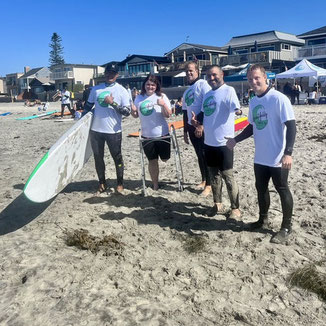
Accept, adapt, achieve
Life after amputation may feel like venturing into unknown territory. From learning how to move your new body to researching the costs of activity-specialized prosthetic arms & legs, it is daunting and frustrating to resume an active lifestyle after limb loss. In August 2021, I lost my left leg in an emergency above-knee amputation. I could not fathom what my life would look like post-op. In the hospital, I promised myself to take advantage of every opportunity I came across and to attempt activities outside my comfort zone. I needed to resume living, and for me, that meant returning to activities as soon as possible. "Accept, adapt, achieve" became my new motto. read more
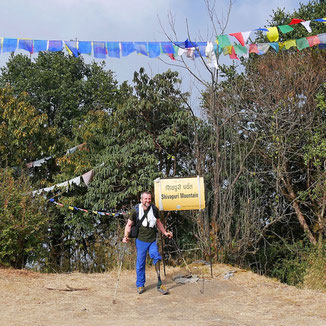
Dealing with volume fluctuations
Here is a problem many active above knee amputees know all too well. A problem that is often overlooked as more and more attention is given to the newest developments around high-tech knees and other exciting advancements in the prosthetic sector. It’s the problem of a proper fit of the socket. It’s the key to using your prosthetic leg to its full potential. And how to deal with fluctuations in the volume of your residual limb - and thus with the fit of your socket. Read more
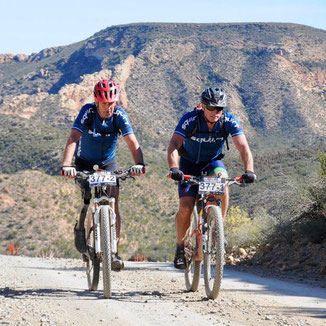
Cycling to regain my life
Today’s article is all about cycling and how it helped Stephen from South Africa’s wonderful Western Cape to come back after a tragic motorcycle accident. The idea for the interview arose during a chat with Jen from ClickMedical, who mentioned Stephen and his inspiring outdoor adventures and brokered the contact. „Thanks Jen I really appreciate these contacts!“ Here is my interview with Stephen. Enjoy! read more